The Bell Witch: America’s Most Famous Haunting — and Its Missing Paper Trail
It is the only haunting in American folklore blamed for killing a man. Between 1817 and 1821, the family of farmer John Bell Sr. in what…
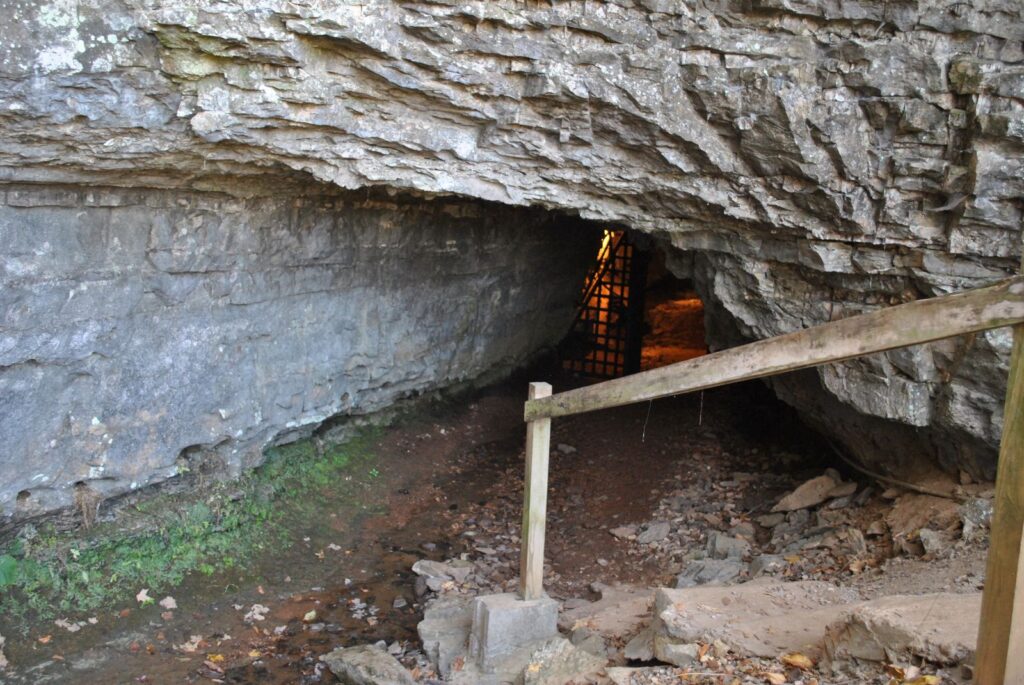 Www78 via Wikimedia Commons, CC BY-SA 3.0
Reader’s note: legends and folklore are presented as reported stories and beliefs, not established fact.
It is the only haunting in American folklore blamed for killing a man. Between 1817 and 1821, the family of farmer John Bell Sr. in what is now Adams, Tennessee, said an invisible entity tormented them for four years — knocking, scratching, slapping, speaking — and finally, they claimed, poisoned the head of the household. The story has been called the most documented haunting in American history. The uncomfortable truth is that the documentation barely exists.
This is the legend as it was told, the book that made it famous, and the paper trail that isn’t there.
The haunting
It began, as the story goes, in the summer of 1817. John Bell was walking his cornfield when he saw an animal he couldn’t make sense of: the body of a large dog with the head of a rabbit, sitting among the rows. He raised his gun and fired. The creature vanished.
Soon after, the Bell house started making sounds no one could explain. Knocking on doors when no one was there. Scratching inside the walls. The sound of something gnawing on bedposts, like a dog working a bone. John searched the property by lamplight and found nothing.
Then came the whispers — a woman’s voice, too faint to understand at first, growing bolder over weeks. It laughed at the family’s prayers. One night it spoke clearly: “I am a spirit. I was once happy, but have been disturbed.” The family began calling it Kate — after a living neighbor, Kate Batts, with whom John Bell had quarreled years earlier over a disputed deal. Kate Batts herself was very much alive. The entity just borrowed her name.
Whatever it was, it knew things it shouldn’t. The legend says it recited sermons being preached in churches miles away, word for word, and predicted visitors before they arrived. It showed kindness to John Bell’s wife Lucy — singing to her, bringing her fruit — and reserved its cruelty for John and for the Bells’ youngest daughter, Betsy. Betsy was slapped until she was bruised, pinched, stuck with pins, her hair pulled by invisible hands. When she became engaged to a young man named Joshua Gardner, the entity raged against the match. Betsy eventually broke the engagement.
John Bell, meanwhile, fell ill in 1817 with a mysterious affliction that worsened over three years. On the morning of December 20, 1820, he was found unconscious. The family discovered a strange vial in his medicine cabinet — a dark liquid no one recognized. Legend says they tested a drop on the family cat, which died within seconds. John Bell died that day. At his funeral, the story goes, the voice sang a rowdy drinking song over the grave.
The haunting is said to have faded after that. It reportedly returned briefly in 1828, promised to come back in 107 years — 1935 — and, so far as anyone can prove, never did.
The general who ran
The legend’s most famous set piece involves Andrew Jackson — not yet president, but already the most famous fighting man in Tennessee. John Bell’s sons had served under Jackson at the Battle of New Orleans, and when Jackson heard about the disturbances, he supposedly rode out to investigate with a wagon full of men.
As the wagon approached the Bell property, the wheels reportedly locked. Horses strained; the wagon wouldn’t move. Jackson is said to have declared he’d rather fight the British again than tangle with the Bell Witch. Then a woman’s voice rang out, telling them they could proceed — that she would “see” Jackson later that evening. The wagon rolled. That night, one of Jackson’s men claimed the entity tormented him, and the party left the next morning.
It’s a great story. There is no contemporary record that it happened.
The paper trail problem
Here is where the honest version has to part ways with the legend — and it’s the most important part of this file.
There is no documentation of the Bell Witch from 1817 to 1821. No newspaper accounts, no letters, no court records, no diary entries from the time describe the haunting. County records confirm the Bell family existed and that John Bell died in December 1820. Of the supernatural events themselves, the contemporary record is silent.
Everything we “know” about the case comes from two much later sources. The first is a manuscript called Our Family Trouble, attributed to Richard Williams Bell — John Bell’s son, who was about six years old when the disturbances allegedly began — and supposedly written around 1846. That manuscript has never been independently examined or authenticated. It exists only as quoted text inside the second source.
The second source is An Authenticated History of the Famous Bell Witch, published in 1894 by Martin Van Buren Ingram, a Clarksville newspaper editor — seventy-three years after the haunting. Ingram’s book, nicknamed “the Red Book” for its cover, is the origin of nearly every detail modern audiences associate with the case: the rabbit-headed dog, the exact wording of the entity’s threats, the Andrew Jackson episode, the poisoned vial, the funeral song. It was published at the height of America’s Spiritualist movement, when the public appetite for provable ghosts was at its peak.
Skeptical researcher Joe Nickell, writing in Skeptical Inquirer, has flagged anachronistic phrasing and stylistic inconsistencies in the supposed Richard Bell manuscript — suggesting Ingram may have written, or heavily rewritten, a story credited to a dead witness who couldn’t object. Other researchers treat the book more gently, as an early folklore study that faithfully recorded what people in the region believed by the 1890s. Either way, the “most documented haunting in American history” rests on a single book, published three generations after the fact, quoting a manuscript no one has ever verified.
Kate Batts
The name the entity gave — Kate — points to the most human part of the story. Kate Batts was a real neighbor of the Bells, a woman the community regarded with suspicion, with whom John Bell had quarreled over a disputed transaction (accounts vary: a land deal, a slave sale). She was alive throughout the haunting.
Folklorists see a familiar pattern here: a community under stress, a disliked neighbor, misfortune in need of an explanation. Whether or not anything supernatural happened on the Bell farm, the Kate Batts connection preserves something real — frontier Tennessee’s habit of blaming its troubles on the people it had already decided not to like. The witch in the story may be folklore. The scapegoating almost certainly isn’t.
The cave
One more honest note: the Bell Witch Cave — the site tourists visit today at 430 Keysburg Road in Adams — was not part of the original legend. The cave sits on the former Bell property, and in the 20th century it became the anchor of a heritage industry: guided tours, a reconstructed Bell cabin, lantern-lit night walks, a fall festival. Visitors report cold spots, drained batteries, strange voices. The cave is real, and the tourism is real. Its connection to the 1817 haunting is a later addition, not a documented one.
That doesn’t make it worthless. Places like the cave are where legends go to live after the newspapers forget them — and the Bell Witch, whatever happened on that farm, has never really left Adams.
Frequently Asked Questions
Did the Bell Witch really kill John Bell?
John Bell died on December 20, 1820 — that much is documented. The claim that a spirit poisoned him comes entirely from the legend: a mysterious vial found in his medicine cabinet, a family cat that allegedly died after tasting it, and a voice celebrating at his funeral. There is no contemporary medical or legal record supporting the poisoning story; it first appears in print in Ingram’s 1894 book, 74 years later.
Who was Kate Batts?
Kate Batts was a real neighbor of the Bell family in Robertson County, Tennessee, with whom John Bell had quarreled over a disputed deal. She was alive during the haunting. The entity tormenting the Bells identified itself as “Kate,” and the community connected the two — a textbook case of blaming misfortune on a disliked neighbor. Whether she had anything to do with the events is unknowable; the folklore made her the witch regardless.
Did Andrew Jackson really investigate the Bell Witch?
The story — Jackson’s wagon freezing on the road, his “rather fight the British” remark, the voice promising to “see” him that evening — is one of the legend’s most repeated episodes and also one of its least supported. It appears in Ingram’s 1894 account with no contemporary corroboration. Treat it as folklore, not history.
Can you visit the Bell Witch Cave?
Yes. The Bell Witch Cave at 430 Keysburg Road in Adams, Tennessee, is privately operated as a tourist attraction with guided tours, a reconstructed Bell cabin, and seasonal events including a fall festival. Note that the cave was not part of the original 1817–1821 legend — its association with the haunting developed in the 20th century.
Is the Bell Witch the most documented haunting in America?
That title gets repeated a lot, and it’s misleading. The case has one detailed source — Ingram’s 1894 book — built on an unauthenticated manuscript from 1846, with no contemporary documentation from the 1817–1821 period itself. What the Bell Witch genuinely is: America’s most storied haunting, the one with the richest legend and the longest afterlife. The documentation is the legend’s weakest point, and saying so is part of telling it honestly.
Keep exploring
The Legend of Sleepy Hollow: The Real Village Behind the Headless Horseman
Every October, a headless rider gallops across America's imagination. He comes from a story published more than two centuries ago — and from a real village…
Read story →
The Salem Witch Trials: Two Hundred Accused, Twenty Dead, and Not a Single Witch
Every October, more than a million people pour into Salem, Massachusetts — 1.1 million unique visitors in October 2025 alone, 96,600 of them on Halloween Day…
Read story →
Jack the Ripper: Five Women, One Autumn, and a Name Made of Ink
Jack the Ripper is the most famous name in true crime. It has filled libraries, launched a hundred suspects, and sold walking tours through Whitechapel every…
Read story →