The Salem Witch Trials: Two Hundred Accused, Twenty Dead, and Not a Single Witch
Every October, more than a million people pour into Salem, Massachusetts — 1.1 million unique visitors in October 2025 alone, 96,600 of them on Halloween Day…
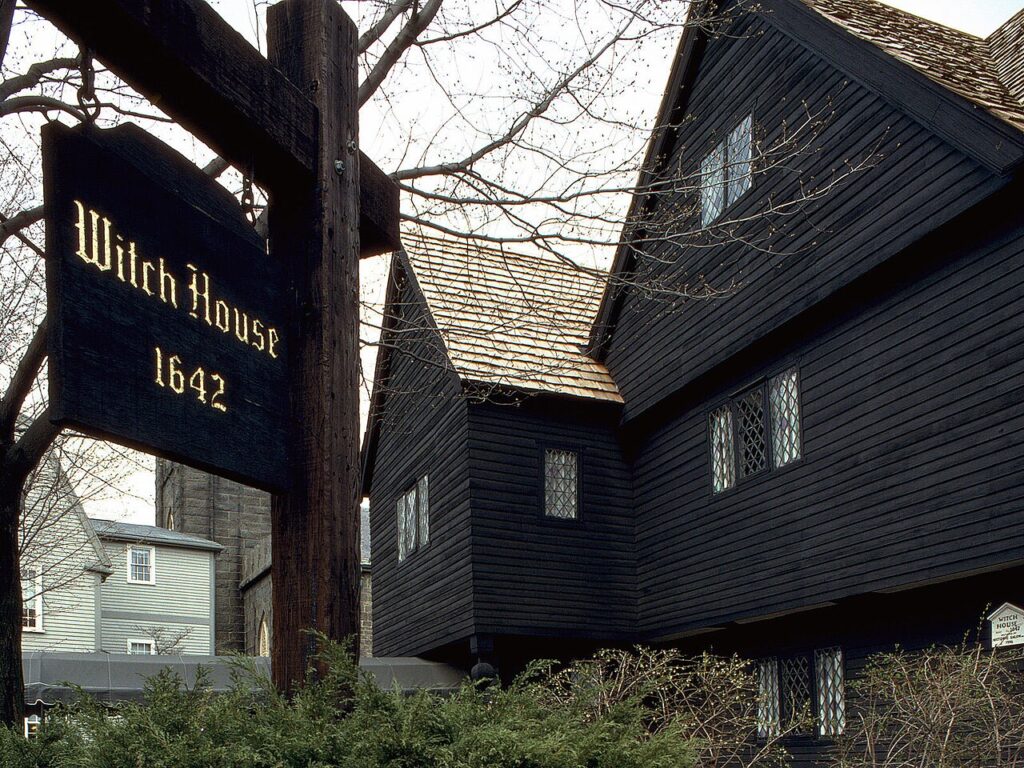 The Witch House, Salem — photo by SalemPuritan, CC BY-SA 4.0, via Wikimedia Commons
Reader’s note: legends and folklore are presented as reported stories and beliefs, not established fact.
Every October, more than a million people pour into Salem, Massachusetts — 1.1 million unique visitors in October 2025 alone, 96,600 of them on Halloween Day — to buy broomsticks, take ghost tours, and dress as witches in the town that calls itself Witch City. Haunted Happenings, the month-long festival, has run since 1982, and Salem has made its peace with the trials by turning them into October.
Here is the thing the broomstick shops don’t put on the sign: the trials weren’t a ghost story. They were a legal machine that killed twenty people in five months, and not one of them was a witch. The real story of Salem is darker than any witchcraft — because it isn’t about the supernatural at all. It’s about fear, property, and power, and about what happens when an accusation becomes evidence.
The winter of 1692
It began in the parsonage of Salem Village — not Salem Town, the place tourists visit today, but the farming settlement five miles inland that is now Danvers, Massachusetts. In January 1692, nine-year-old Betty Parris and her eleven-year-old cousin Abigail Williams, both living in the household of the Reverend Samuel Parris, began having fits: screaming, twisting into strange postures, complaining of being bitten and pinched by invisible hands. The village doctor, William Griggs, found no natural cause and offered the diagnosis that would detonate the colony: the girls were bewitched. “The evil hand is upon them,” he said.
A neighbor, Mary Sibley, suggested a folk remedy to identify the witch: a witch cake, made of rye meal mixed with the afflicted girls’ urine, baked in ashes and fed to the family dog. The idea was countermagic — the dog would point, by its suffering, to the guilty party. Tituba, an enslaved woman in the Parris household, baked the cake with her husband John Indian on February 25. When Parris found out, he was furious — and beat Tituba.
On February 29, 1692, warrants went out for three women: Tituba, Sarah Good, and Sarah Osborne. Good was a homeless beggar who smoked a pipe and muttered at her neighbors; Osborne was bedridden and scandalous in the village’s eyes for having lived with her second husband before marrying him. Tituba was the outsider — enslaved, brought from Barbados, her origins still debated by historians. The examinations began March 1. Tituba, beaten for days, did the one thing that would save her life: she confessed.
Her confession was vivid and elaborate — a tall man dressed in black who asked her to sign his book, cats and black dogs and yellow birds, specters flying through the air. It gave the magistrates exactly what they needed: proof, from a witch’s own mouth, that the Devil was at work in Salem Village. The hunt was on.
The machine
On May 27, 1692, the newly arrived royal governor, Sir William Phips, established a special court to clear the mounting caseload: the Court of Oyer and Terminer — “to hear and determine” — under Chief Justice William Stoughton. The court admitted a form of evidence that made conviction nearly automatic: spectral evidence. A victim could testify that the accused person’s spirit — their specter — had tormented them, even while the accused’s body was miles away. There was no way to disprove a ghost.
The court’s logic created a perfect trap. Confess to witchcraft and you lived — around fifty people confessed during the crisis, and not one of them was executed. Maintain your innocence and you hanged. The innocent died; the liars walked free. Samuel Wardwell of Andover confessed, then was stricken by conscience and took it back. He was hanged on September 22 for the recantation.
The accusations spread far beyond Salem Village — to twenty-four communities across Essex County. Andover was hit hardest: one in ten residents accused. By summer the jails in Salem and Boston were overflowing, and the afflicted girls’ word could put anyone in irons.
The summer of hangings
Bridget Bishop was first, hanged June 10, 1692 — a woman from Salem Town who had outlived two husbands and owned an orchard and a reputation her neighbors gossiped about. On July 19, five more died: Rebecca Nurse, a seventy-one-year-old grandmother so respected that forty neighbors signed a petition for her; Sarah Good, who went to the gallows cursing the minister who had condemned her; Susannah Martin, Elizabeth Howe, and Sarah Wildes.
August 19 took five more, including the Reverend George Burroughs, a former Salem Village minister accused of being the witches’ ringleader. On the gallows, Burroughs recited the Lord’s Prayer flawlessly — something a witch was supposedly unable to do — and the crowd stirred, some in tears. Cotton Mather, on horseback, intervened: the man had been convicted by a jury, he said, and the Devil himself could appear as an angel of light. Burroughs was hanged anyway. His body was stripped and thrown into a shallow grave.
The last eight died September 22: Martha Corey, Mary Eastey, Alice Parker, Ann Pudeator, Margaret Scott, Wilmott Redd, Samuel Wardwell, and Mary Parker. Nineteen people hanged in all — fourteen women and five men — at a rocky outcrop below Gallows Hill now called Proctor’s Ledge. For more than three hundred years, no one knew exactly where. Maps marked Gallows Hill but no spot on it. It took until January 2016 for the Gallows Hill Project, a team from the University of Virginia, to confirm the ledge from eyewitness descriptions, old maps, and topography. The city dedicated a small memorial there in 2017, at the end of a residential street, behind a Walgreens.
And then there was the twentieth victim, who died differently.
Giles Corey and the weight
Giles Corey was eighty-one, a prosperous farmer from Salem Farms. When his wife Martha was accused, he at first believed the charges — then he too was accused, and he understood the machine. On September 17, 1692, when he was brought to trial, Corey refused to enter a plea — neither guilty nor innocent. The court responded with peine forte et dure, “strong and hard punishment”: he was laid on the ground, a board placed on his chest, and stones piled on until he pleaded or died. For two days they added weight. He died on September 19 without entering a plea.
Tradition says his last words were “More weight” — a defiant request for the stones to keep coming. It’s a magnificent line, and it may not be true: no court record preserves it, and it reaches us through later retellings. What the record does preserve is the reason he refused to plead, and it’s the coldest detail in the whole story. Under English law, a convicted felon’s property was forfeit to the Crown. A man who died without pleading was never convicted — and his estate passed to his heirs. Corey let them crush him for two days so his sons would keep the farm. The trials were always, underneath everything, about land.
Tituba
Tituba survived the trials, which is not the same as surviving them well. Because she had confessed, she was never tried — confessors weren’t executed — but she sat in jail for thirteen months because Parris refused to pay the fees to free her. On May 9, 1693, her case came up at last, and the grand jury wrote “ignoramus” on the indictment: no truth in the charges, case dismissed. She was still not free. Parris wouldn’t pay, so she was sold to an unknown buyer who covered the fees, and she vanishes from the historical record after 1693. We know nothing else about her life — not where she went, not when she died. Her daughter Violet stayed with the Parris family until at least 1720.
She is the person at the center of the Salem story, and we know the least about her. Even her origins are debated: colonial records describe her as an Indian woman brought from Barbados; one historian traced her to the Arawak people of what is now Venezuela, kidnapped as a child and sold into Caribbean slavery. No portrait of her exists — every image you’ve seen of Tituba is an artist’s invention, centuries later. The woman whose beaten confession launched the hunt is the one voice the record never lets us hear.
What was really going on
Historians have argued about Salem’s causes for three centuries, and the honest answer is that no single cause explains it. But the pieces fit together into something far more mundane — and more frightening — than witchcraft.
Salem Village was a community at war with itself. Two families dominated it: the Putnams, old Puritan farmers who clung to the village’s theocratic past, and the Porters, merchants grown rich on Salem Town trade. Their feud went back decades — in 1672 a Porter dam and sawmill flooded Putnam farms, and the lawsuit that followed was only the beginning. When the Reverend Samuel Parris arrived in 1689, he sided with the Putnams; his quarrels over salary and firewood split the congregation. In October 1691, the village committee ousted the Parris-Putnam faction and voted down the tax that paid the minister’s salary. Five months later, the minister’s household produced the afflicted girls — and Thomas Putnam’s twelve-year-old daughter Ann was among the loudest accusers. Thomas Putnam filed more complaints than anyone in the crisis, and the accused kept turning out to be people with land the Putnams wanted: Rebecca Nurse, whose farm bordered theirs; George Jacobs Sr., whose land adjoined theirs; John Proctor, whose acres sat on the disputed boundary between village and town.
Layered over the feud was terror. King William’s War was raging on the frontier; French and Native raids had driven refugees into Essex County with stories of massacre, and Salem Village sat on the edge of the wilderness. Massachusetts had lost its charter in 1684 and spent years in political limbo before a new one arrived in 1691 — the government trying the witches was itself brand new and unsure of its footing. And hanging over all of it was the simplest motive in the world: a convicted witch’s property was forfeit. Accusation was a way to take a neighbor’s farm.
There are other theories. In 1976, psychologist Linnda Caporael proposed ergot — a fungus that grows on damp rye and causes convulsions and hallucinations — as the cause of the girls’ fits. It’s a popular theory and a weak one: ergot poisoning doesn’t pick and choose its victims household by household, the symptoms don’t match well, and the afflictions spread by suggestion, not by bread. Historian Mary Beth Norton has argued that the girls’ accusations were, among other things, an expression of power by young women who had no other kind — in a world where a twelve-year-old girl’s word could hang a grandmother, accusation was the only authority available to them.
None of these explanations cancels the others. Salem was a land dispute, a church fight, a frontier panic, a property grab, and a group of frightened teenagers discovering they could make the whole world listen — all at once, in a community that believed the Devil was real and that God wanted him found.
The end
What stopped the trials wasn’t mercy. It was the machine reaching too high. In October 1692, Increase Mather — the colony’s most respected minister — published Cases of Conscience, arguing that spectral evidence was unreliable: “It were better that ten suspected witches should escape, than that one innocent person should be condemned.” And then the accusations touched Governor Phips’s own wife. On October 29, Phips dissolved the Court of Oyer and Terminer. The trials that followed under a new court, with spectral evidence barred, acquitted nearly everyone.
The reckoning took years. In January 1697, the colony held a fast day of atonement; the judge Samuel Sewall stood in Boston’s South Church while his public apology was read aloud, and twelve jurors asked forgiveness for their verdicts. In 1706, Ann Putnam Jr. — the twelve-year-old accuser, now twenty-six — stood in the Salem Village church and had her confession read: she had been deluded by Satan, she said, and she begged forgiveness for the innocent blood she had helped shed. In 1711, Massachusetts reversed the attainders and voted £578 12 shillings in compensation to the victims’ families.
But full exoneration took centuries. Six victims were cleared by the legislature in 1957, five more in 2001 — and one was missed every time. Elizabeth Johnson Jr., convicted at twenty-two in 1693 and spared execution only by the governor’s reprieve, had no descendants to press her case, and she was omitted from every act, possibly confused in the records with her mother of the same name. In 2022, an eighth-grade civics class in North Andover took up her cause, and the Massachusetts legislature cleared her name — 329 years after her conviction. She was the last one.
What Salem gets wrong
Start with the most common image of Salem, and throw it out: nobody was burned at the stake. Not one person. English law hanged witches; burning was the punishment for heresy on the continent, not in Massachusetts Bay. Every Salem victim was hanged — except Giles Corey, who was pressed.
Arthur Miller’s The Crucible (1953) is the reason most people know Salem at all, and it is a play about 1950s America wearing 1692 clothes. Abigail Williams was eleven, not seventeen. John Proctor was about sixty. There was no affair between them — Miller invented it, and the love triangle that drives the play never happened. The Crucible is a great play about McCarthyism. It is not history.
The trials didn’t even happen in the Salem tourists visit. They began in Salem Village — now Danvers — and the executions happened at Proctor’s Ledge, which nobody could even locate until 2016. The “Gallows Hill” on the postcards is the wrong hill.
And the hysteria didn’t stop at humans. Two dogs were killed. In October 1692, a girl in Andover accused a neighbor’s dog of bewitching her, and the villagers shot it on the spot. The ministers later concluded the dog must have been innocent — had it truly been the Devil in disguise, they reasoned, no bullet could have killed it. A second dog in Salem Village was killed after the afflicted girls claimed a man’s spirit was riding it and tormenting it — the dog was considered the victim, and they killed it anyway. When your test for innocence is whether you can be killed, everyone fails it eventually.
Salem now
The Witch House on Essex Street is the only building still standing with a direct link to the trials — Judge Jonathan Corwin lived there, and the accused were examined in its rooms. A few minutes’ walk away, beside the Charter Street Burying Point where the town’s dead have lain since 1637, the Salem Witch Trials Memorial holds twenty granite benches in a low stone wall, each engraved with a victim’s name and the date and manner of their death. It was dedicated on August 5, 1992, and Elie Wiesel spoke at the ceremony. Proctor’s Ledge got its memorial in 2017 — a semicircular granite wall with nineteen names, at the end of a quiet residential street.
The benches sit a short walk from the shops selling broomsticks and spell kits, and that is Salem’s honest contradiction: the town that hanged twenty innocent people now makes its living from the story, and the story is told best by the quiet places — the memorial wall, the ledge, the old burying ground — where the noise of October can’t quite reach.
The Salem witch trials aren’t a ghost story. No witch was ever found in Salem, because there was nothing to find. What the trials found was how quickly a frightened community can build a machine that turns accusation into evidence, evidence into verdict, and verdict into a grave — and how long it takes, 329 years in the last case, to say the names back.
Frequently Asked Questions
Were any witches burned at the stake in Salem?
No — not one. English law hanged witches; burning was a punishment for heresy on the European continent. All nineteen Salem victims were hanged, and Giles Corey was pressed to death. The burning image comes from European witch hunts and from popular culture, not from Massachusetts.
Why did Giles Corey refuse to plead?
Under English law, a convicted felon’s property was forfeit to the Crown. By refusing to enter a plea, Corey was never convicted — so his estate passed to his sons instead of being seized. He endured two days under the stones to protect his family’s farm. Tradition says his last words were “More weight,” though no court record preserves the line.
What was spectral evidence?
Testimony that an accused person’s spirit or specter tormented the victim, even when the accused’s body was elsewhere. The Court of Oyer and Terminer admitted it, and it was nearly impossible to disprove — you cannot prove your ghost was not somewhere. Increase Mather’s Cases of Conscience (October 1692) argued against it, and the trials collapsed once it was barred.
What happened to Tituba?
She confessed, which saved her from execution — no confessor was hanged. She spent thirteen months in jail because Reverend Parris refused to pay her fees, was cleared in May 1693, and was then sold to an unknown buyer who covered the fees. She vanishes from the historical record after 1693; nothing is known of the rest of her life.
Can you visit the Salem witch trials sites?
Yes. The Witch House (Jonathan Corwin’s home) is a museum on Essex Street; the Salem Witch Trials Memorial, with twenty benches for the victims, stands beside the Charter Street Burying Point; and the Proctor’s Ledge Memorial marks the execution site, confirmed in 2016, in a residential neighborhood off Boston Street. Salem Village, where it began, is now Danvers, about five miles away.
Keep exploring
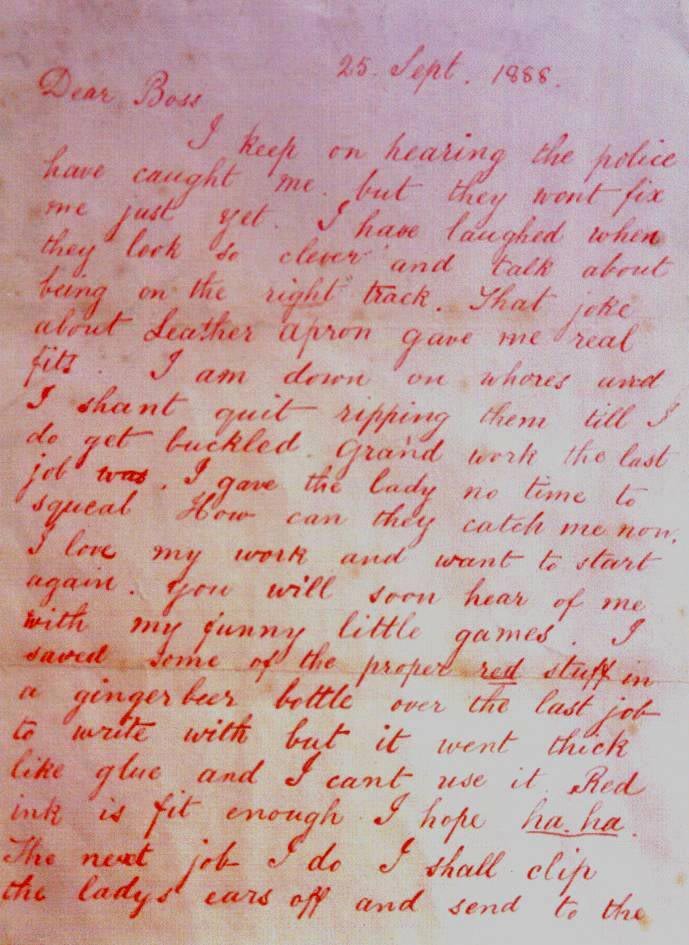
Jack the Ripper: Five Women, One Autumn, and a Name Made of Ink
Jack the Ripper is the most famous name in true crime. It has filled libraries, launched a hundred suspects, and sold walking tours through Whitechapel every…
Read story →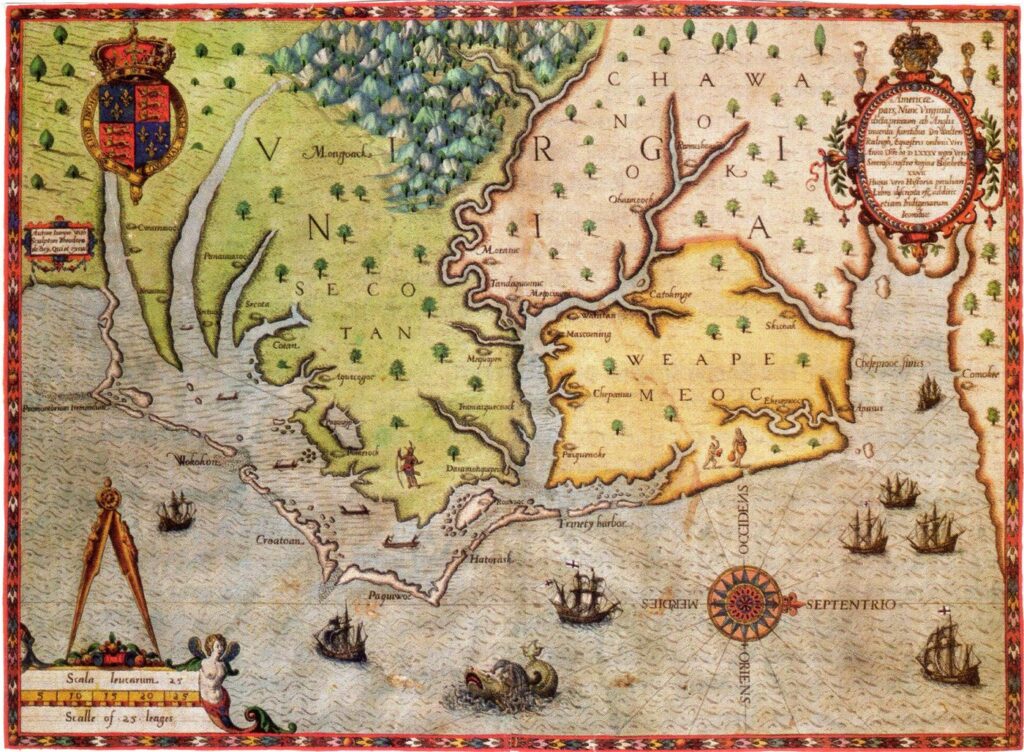
The Lost Colony of Roanoke: One Word, 115 People, and 400 Years of Searching
On August 18, 1590, Governor John White waded ashore on Roanoke Island expecting to find his family. His daughter Eleanor was there. His son-in-law Ananias Dare…
Read story →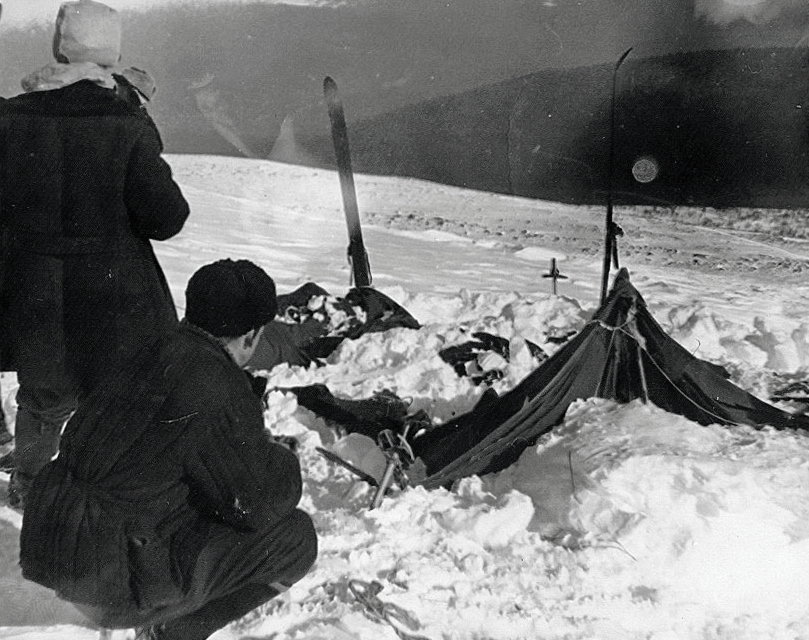
Dyatlov Pass: Nine Hikers, One Night, and the File That Won’t Stay Closed
On February 26, 1959, a search party climbing a frozen slope in the northern Ural Mountains found a tent half-buried in snow. It had been cut…
Read story →