The Legend of Sleepy Hollow: The Real Village Behind the Headless Horseman
Every October, a headless rider gallops across America's imagination. He comes from a story published more than two centuries ago — and from a real village…
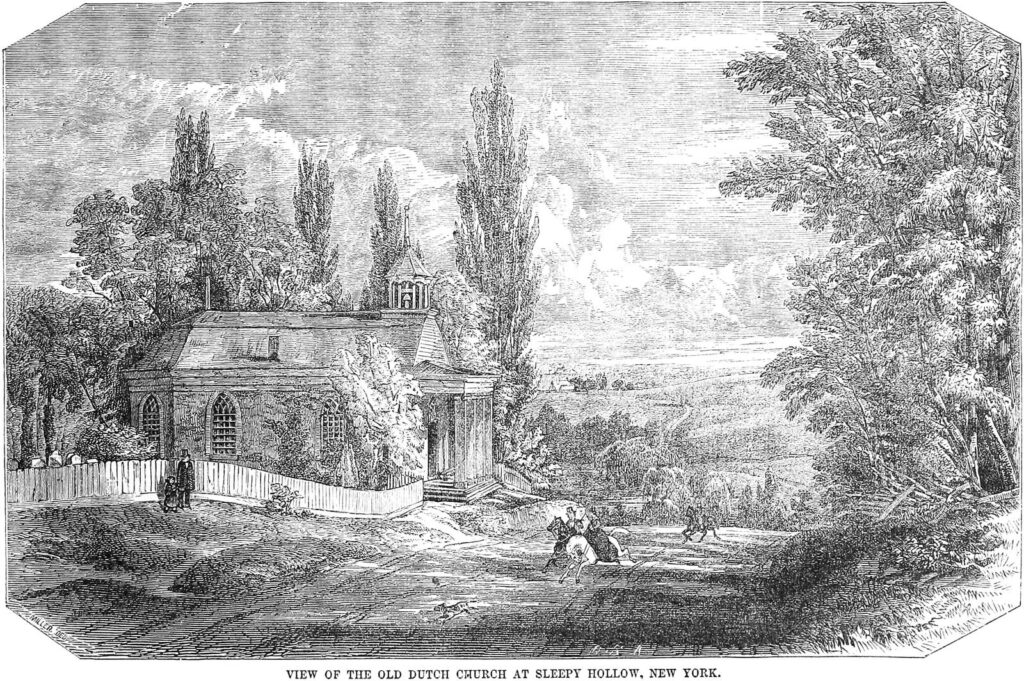 Public domain engraving via Wikimedia Commons
Reader’s note: legends and folklore are presented as reported stories and beliefs, not established fact.
Every October, a headless rider gallops across America’s imagination. He comes from a story published more than two centuries ago — and from a real village on the Hudson River that eventually renamed itself after him. This is the story of what Washington Irving wrote, where the Horseman came from, and the town that decided to become the legend.
The story
“The Legend of Sleepy Hollow” appeared in 1820, tucked into Washington Irving’s collection The Sketch Book of Geoffrey Crayon, Gent. — which Irving wrote while living in Birmingham, England, of all places. It is set around 1790 in the Dutch settlement of Tarry Town, in a secluded glen called Sleepy Hollow.
The plot is simple and perfect. Ichabod Crane, a lean, lanky, deeply superstitious schoolmaster from Connecticut, comes to the Hollow to teach. He falls for Katrina Van Tassel, the 18-year-old daughter of a wealthy farmer — partly for her charms, partly for her inheritance. His rival is Abraham “Brom Bones” Van Brunt, the local strongman, a superb horseman with a taste for pranks.
One autumn night, riding home from a party at the Van Tassel farm, Ichabod is pursued through the dark by the glen’s most famous ghost: the Headless Horseman, said to be the spirit of a Hessian trooper whose head was taken off by a cannonball during the Revolutionary War, doomed to ride out nightly in search of it. The chase ends at the bridge over the Pocantico — and the next morning, all anyone finds is Ichabod’s hat and a smashed pumpkin.
Ichabod is never seen in Sleepy Hollow again. Katrina marries Brom Bones, who is said to look “exceedingly knowing” whenever the story of Ichabod is retold. Irving never quite says the Horseman was Brom in disguise. He doesn’t have to.
Washington Irving
Irving is often called the first American writer to win an international reputation, and “Sleepy Hollow” — along with its companion piece “Rip Van Winkle” — is why. He knew the Hudson Valley ground he was writing about: he had traveled through the Tarrytown area as a young man in the 1790s, and from 1835 until his death in 1859 he lived at Sunnyside, his famous home in Tarrytown, just south of the Hollow.
He is buried in Sleepy Hollow Cemetery, on a hill overlooking the land he immortalized — a short walk from the Old Dutch Church and the bridge in his story. The village’s history and his fiction are buried, quite literally, in the same ground.
Where the Horseman came from
Irving didn’t invent the headless rider. The figure rides out of much older folklore. The direct ancestor is a German folktale recorded by Karl Musäus, featuring a headless horseman haunting a hollow — Irving, steeped in European literature, knew the tradition well. Readers have also long noted the fingerprints of Robert Burns’ “Tam o’ Shanter” (1790), in which a rider flees witches and is saved by crossing running water — the same running-water rule that governs Irving’s bridge, where the Horseman’s power ends.
The Hessian backstory is Irving’s own American graft onto the old motif: a mercenary of the Revolutionary War, decapitated by a stray cannonball in “some nameless battle,” riding forth each night in quest of his head. It gave the ancient archetype a local uniform and a local war — and that is why the Horseman feels American rather than imported.
The real Sleepy Hollow
Here is the part most readers never learn: Sleepy Hollow is real, and the name is older than Irving.
In 1655, the Dutch settler Adriaen Van der Donck referred to the Pocantico River as “Slappershaven” — “Sleeper’s haven.” The little Dutch community that grew up along it kept the name. The Old Dutch Church, a small stone church with a gambrel roof, has stood there since the late 1600s — through three centuries now, still owned by its congregation, still lit by candles.
But for most of the 20th century, the village on the map wasn’t called Sleepy Hollow at all. It had been incorporated in 1871 as North Tarrytown, and it grew up as an industrial town — at its peak, more than 4,000 people worked at the General Motors plant on the Hudson waterfront. When the plant closed in 1996, the village faced an uncertain future. That same year, residents voted roughly two-to-one to take back the old name: Sleepy Hollow.
It was, as one local account put it, an enormously successful branding exercise — and a daring one. A post-industrial town decided its most valuable resource was its own haunted past.
Was it Brom Bones?
The story’s central question has never been whether ghosts are real. It’s whether there was a ghost at all.
The skeptical reading — the one Irving all but signs at the bottom of the page — is that the Horseman was Brom Bones in a costume, running a rival out of town with a pumpkin for a head. The smashed pumpkin at the bridge is the giveaway, and Brom’s “exceedingly knowing” look afterward is the confession.
But Irving leaves the door open just wide enough. The townspeople in the story believe the specter carried Ichabod off. And the tale’s frame narrator — the story is presented as a legend found among the papers of a dead man — refuses to settle it. That ambiguity is the engine of the whole thing: a ghost story that might be a prank, a prank that might be a ghost story. Two hundred years of readers have been arguing about it ever since, which is exactly what Irving wanted.
Sleepy Hollow at Halloween
No American town leans into October the way this one does. Each fall, tens of thousands of visitors descend on the village for a season built entirely around Irving’s tale: the Great Jack O’ Lantern Blaze, thousands of hand-carved pumpkins glowing at Van Cortlandt Manor in nearby Croton-on-Hudson; Horseman’s Hollow, a haunted trail through Philipsburg Manor; lantern-lit tours of Sleepy Hollow Cemetery, where Irving himself lies; and street signs painted in orange and black, with the Horseman’s silhouette on the police cars.
The story has been filmed repeatedly — a 1922 silent, Disney’s 1949 animated Ichabod, Tim Burton’s 1999 gothic blockbuster — but the village is the adaptation that never closes. A town that voted to rename itself after a ghost story is a town that understands something about how legends work: tell them well enough, and they start telling you.
That’s the honest version. A writer in England in 1820 stitched German folklore, a Dutch glen, and a Hessian ghost into a story about a schoolteacher and a pumpkin. A real village kept the church, kept the cemetery, kept the bridge — and when the factory closed, reached back two centuries and took the name. The Horseman never existed. The Hollow did. In the end, the Hollow won.
Frequently Asked Questions
Is Sleepy Hollow a real place?
Yes. Sleepy Hollow is a real village in Westchester County, New York, on the Hudson River. It was incorporated as North Tarrytown in 1871 and renamed Sleepy Hollow in 1996. The Old Dutch Church, Sleepy Hollow Cemetery, and the bridge from Washington Irving’s story are all real places you can visit.
When was “The Legend of Sleepy Hollow” written?
Washington Irving’s short story was first published in 1820 as part of his collection The Sketch Book of Geoffrey Crayon, Gent., which he wrote while living in Birmingham, England. Along with “Rip Van Winkle,” it is among the earliest examples of American fiction still widely read today.
Who is the Headless Horseman supposed to be?
In Irving’s story, the Horseman is said to be the ghost of a Hessian trooper decapitated by a cannonball during the American Revolutionary War, doomed to ride out nightly in search of his head. The story implies — but never confirms — that the “ghost” Ichabod encounters was actually his rival Brom Bones in disguise, wielding a pumpkin.
Can you visit the Old Dutch Church?
Yes. The Old Dutch Church of Sleepy Hollow, dating to the late 1600s, still stands at 430 N Broadway and is open to visitors at certain times; the congregation now worships there in summer. The adjacent Sleepy Hollow Cemetery, where Washington Irving is buried, offers guided tours, including lantern-lit evening tours in the fall.
What is the Great Jack O’ Lantern Blaze?
The Great Jack O’ Lantern Blaze is a massive annual Halloween event at Van Cortlandt Manor in Croton-on-Hudson, near Sleepy Hollow, featuring thousands of hand-carved illuminated pumpkins arranged in elaborate displays. It is one of the centerpieces of Sleepy Hollow’s October season, alongside Horseman’s Hollow and the village’s cemetery tours.
Keep exploring
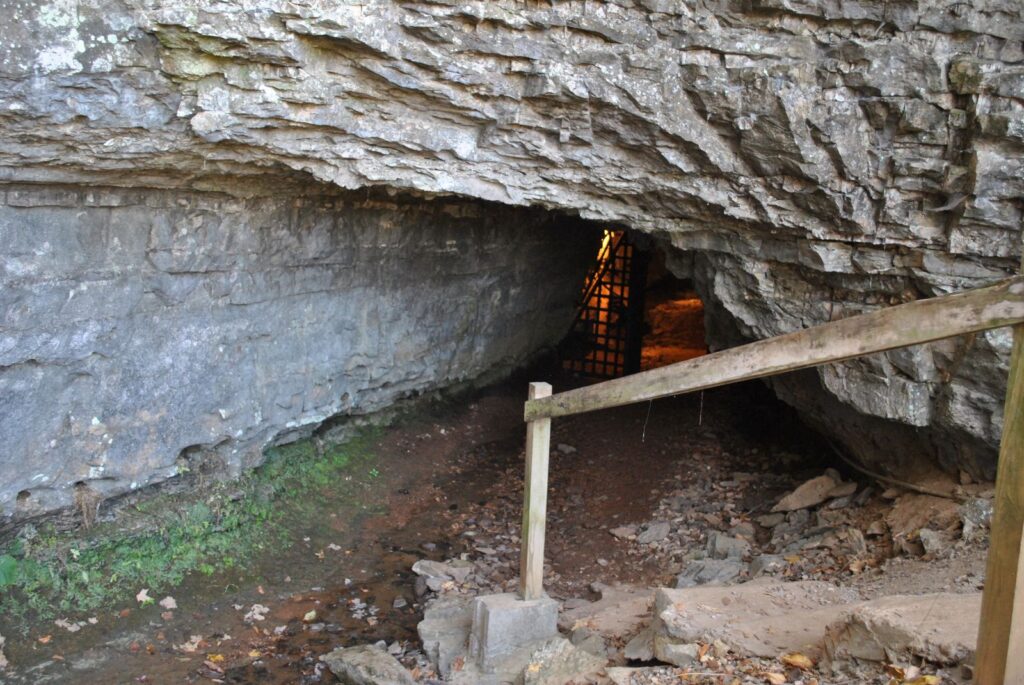
The Bell Witch: America’s Most Famous Haunting — and Its Missing Paper Trail
It is the only haunting in American folklore blamed for killing a man. Between 1817 and 1821, the family of farmer John Bell Sr. in what…
Read story →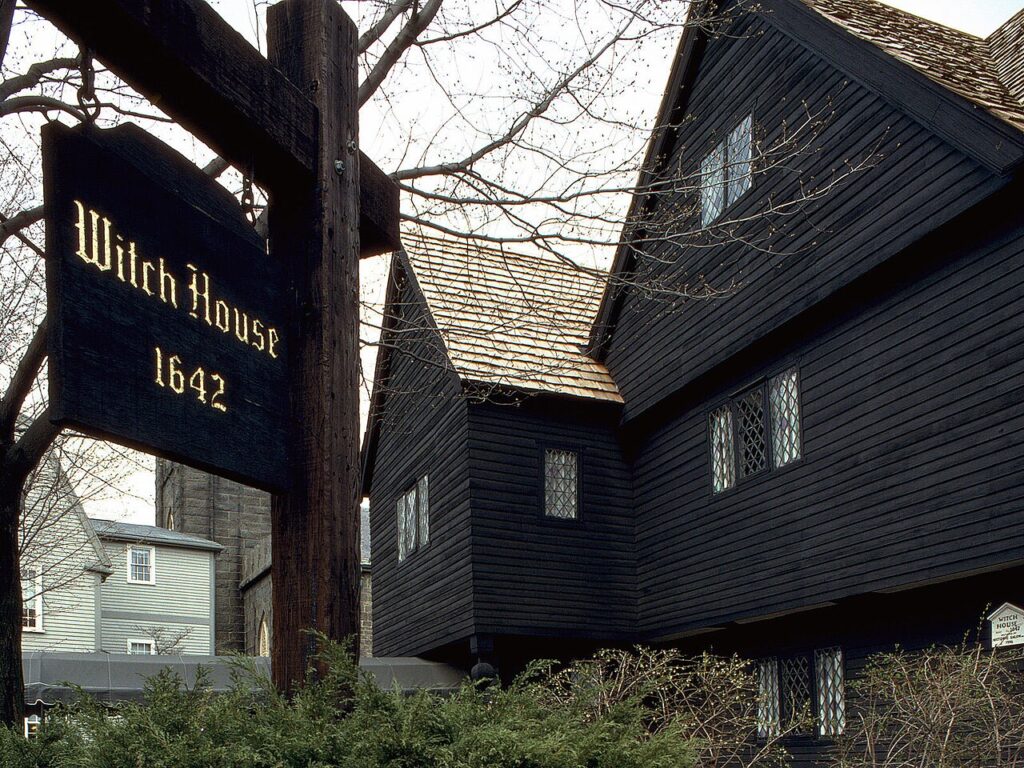
The Salem Witch Trials: Two Hundred Accused, Twenty Dead, and Not a Single Witch
Every October, more than a million people pour into Salem, Massachusetts — 1.1 million unique visitors in October 2025 alone, 96,600 of them on Halloween Day…
Read story →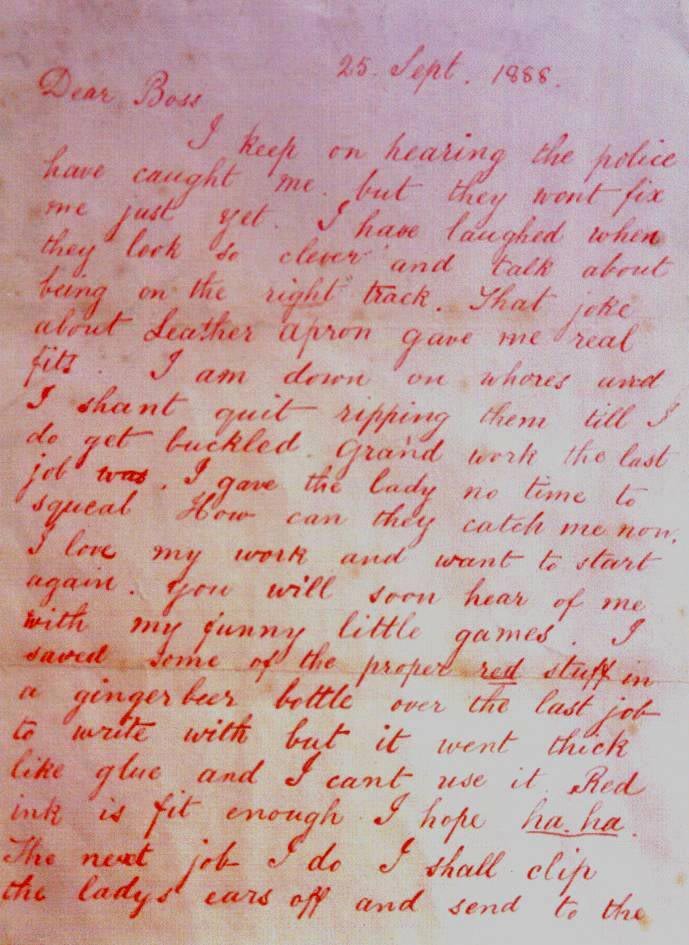
Jack the Ripper: Five Women, One Autumn, and a Name Made of Ink
Jack the Ripper is the most famous name in true crime. It has filled libraries, launched a hundred suspects, and sold walking tours through Whitechapel every…
Read story →