La Llorona: The Weeping Woman Who Is Older Than Her Ghost Story
You know the cry even if you've never heard the story. A woman in white, walking a riverbank at night, wailing for her children: "¡Ay, mis…
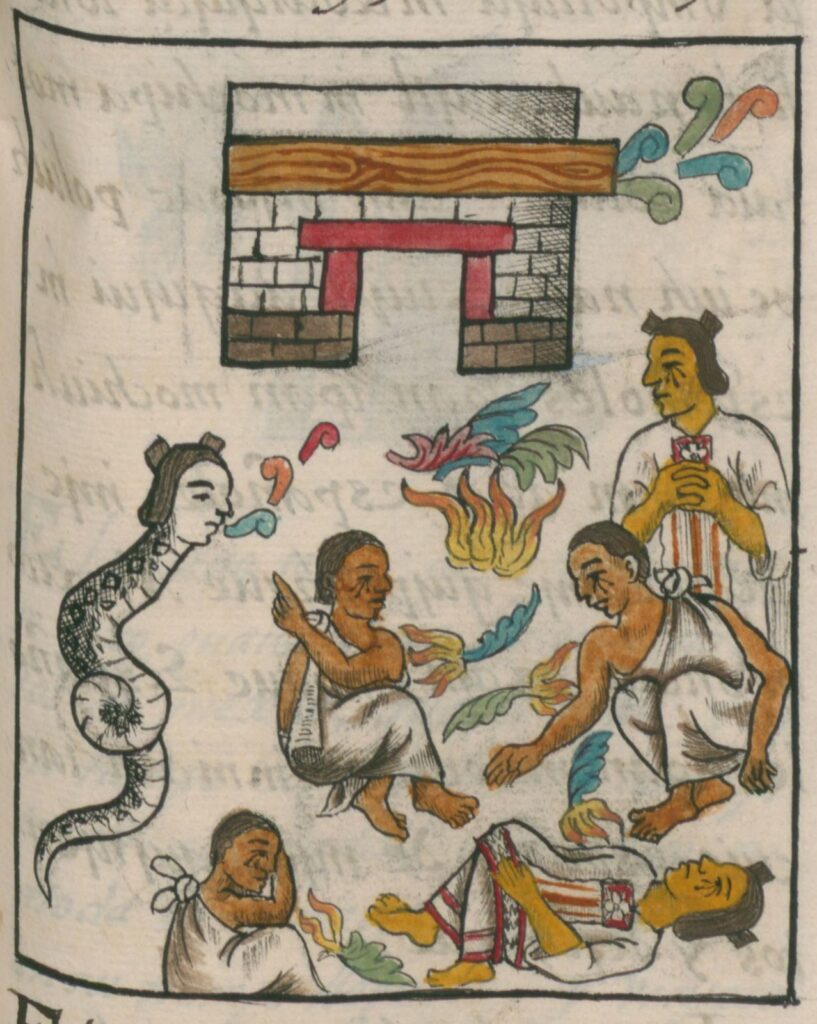 Public domain via Wikimedia Commons (Florentine Codex illustration)
Reader’s note: legends and folklore are presented as reported stories and beliefs, not established fact.
You know the cry even if you’ve never heard the story. A woman in white, walking a riverbank at night, wailing for her children: “¡Ay, mis hijos!” — “Oh, my children!” Parents across Mexico and the American Southwest have told their kids for generations not to wander near the water after dark, because La Llorona might be out there, still searching.
Here’s the surprise buried inside that warning: the ghost story most people know — the beautiful María, the faithless husband, the drowned children — is the newest layer of this legend. The cry itself is older than the conquest of Mexico. It was already echoing through the streets of Tenochtitlan before a single Spaniard set foot in it.
The cry before the conquest
The earliest written record connected to La Llorona names no one “La Llorona” at all. It comes from the Florentine Codex, the great 16th-century compendium compiled by the Franciscan friar Bernardino de Sahagún from interviews with Nahuatl-speaking elders who had lived through the Spanish conquest. Its twelfth book lists ten omens said to have preceded the arrival of Hernán Cortés. The sixth records a woman’s voice heard weeping through the Aztec capital at night, crying that she must abandon her children.
Scholars tie that voice to a goddess named Cihuacóatl — “Snake Woman” — a snake-skirted mother figure and patroness of women in childbirth. Sahagún describes her appearing in white, walking the streets at night, weeping and wailing. Her cry, as the elders remembered it, went: “Oh, my children, we are about to go forever.” Sometimes: “Oh, my children, where am I to take you?” The voice filled everyone who heard it with dread, and word of the bad omen spread through the empire. She was, in the Aztec understanding, an omen of war and of the fall of the empire itself — a mother grieving a catastrophe that hadn’t happened yet.
That distinction matters, because it’s the one modern retellings most often lose: in the oldest record, Cihuacóatl does not kill her children. She mourns children she is about to lose. She is a goddess of childbirth grieving in advance — a figure of maternal dread, not maternal crime. A separate passage in the Codex describes a demon in a woman’s form that killed an infant in its cradle, and that detail has been folded into modern summaries as if Cihuacóatl drowned her own children. The original text doesn’t say that. The murder came later, with a different story.
Two other Aztec figures fed the same river of belief. Chalchiuhtlicue, the “Jade-skirted one,” was goddess of rivers, lakes, and storms — feared, said to drown people and overturn boats. And the Cihuateteo were the spirits of women who died in childbirth, a death the Aztecs counted as a form of battle, who were said to descend at certain times to haunt crossroads. Put them together — a weeping mother-goddess, a drowning water-goddess, and the spirits of mothers who died giving life — and the ground was already prepared for a spectral woman in white by the water, centuries before anyone named her María.
The colonial overlay
The María story, the one most people tell today, is a product of the colonial world that replaced Tenochtitlan. In its typical version, a beautiful woman named María marries a rich ranchero or conquistador and bears him two children. One day she discovers her husband with another woman — or he leaves her to marry a doña of his own rank — and in a fit of rage she drowns their children in a river. She regrets it instantly, cannot save them, and drowns herself as well. Denied entry to the afterlife, she is condemned to roam the earth in purgatory, crying for the children she can never find.
In another common variant, the children are illegitimate, and María drowns them so their father cannot take them away to be raised by his new wife. The details shift by region and by teller; the constants are the white dress, the nocturnal wailing, and the water.
What changed between the goddess and the ghost is the moral. Cihuacóatl’s cry was an omen — a warning about a world ending. María’s cry is a punishment — a warning about a woman’s behavior. The colonial retelling took a grieving mother-goddess and recast her as a cautionary tale about maternal fidelity, sin, and the wages of rage, reflecting the Catholic morality and the gendered expectations the Spanish imposed on the women of New Spain. The figure absorbed other colonial wounds along the way, too: scholars connect her to La Malinche, the Indigenous interpreter for Cortés, vilified as a traitor and caught between two worlds, whose own story of betrayal and lost children echoes through the legend.
And here’s a detail that undoes the María story’s claim to be the original: the earliest published reference to a figure called La Llorona is a 19th-century sonnet by the Mexican poet Manuel Carpio — and in it, La Llorona is the ghost of a woman named Rosalia, murdered by her husband. There is no infanticide in it at all. The María version, the one the world now treats as the legend, is a later telling that won out over the others.
The variations
La Llorona belongs to no single river, which is why no map pin belongs on this article. In Mexico, she is told to children as a reason not to wander in the dark near rivers and lakes. In the American Southwest, Mexican-American communities adapted her to the Rio Grande and the irrigation canals, where her cries are said to carry across the water at night. In Guatemala she warns against neglecting children or wandering near dangerous rivers; in Chile and Peru the tale bends toward social injustice and women’s suffering under patriarchal societies. In Texas, a creek carries her name in translation — Woman Hollering Creek, later the title of Sandra Cisneros’s celebrated short story collection, which reclaims the figure rather than merely fearing her.
She has also become a performance. Since 1993, the canals of Xochimilco in Mexico City have staged La Cihuacoatle, Leyenda de la Llorona, a yearly waterfront theatrical production timed to the Day of the Dead — the goddess’s old name, Cihuacóatl, restored to the title. And she has become a movie monster: La Venganza de la Llorona in 1974, and the Hollywood horror The Curse of La Llorona in 2019, which turned her into a vengeful spirit in the Conjuring universe’s sense — a long way from a goddess weeping over an empire.
Modern Chicana writers and scholars have pushed back on that version. In their hands, La Llorona is not just a warning to behave — she is a figure of resistance, a mother’s grief given a voice, a protest symbol against the very colonial order that rewrote her. The cry that once announced the fall of an empire now carries, for some tellers, the grief of the conquest itself: a mother mourning children lost to history, not to a river.
Frequently Asked Questions
Is La Llorona real?
There is no historical person behind La Llorona. The figure is a composite: an Aztec goddess (Cihuacóatl) whose night-cries were recorded in the Florentine Codex, a water-goddess (Chalchiuhtlicue) associated with drowning, the spirits of women who died in childbirth (Cihuateteo), and a colonial-era ghost story about a woman named María. What is real is the 500-year paper trail — and the fact that people have reported hearing her for centuries.
Did María drown her children?
María is a character in the colonial version of the legend, not a documented historical person. The earliest published reference to La Llorona — a 19th-century sonnet by Mexican poet Manuel Carpio — names a different woman entirely (Rosalia, murdered by her husband) and contains no infanticide at all. The María story, with the drowned children, is a later telling that became the standard version.
What is the Aztec connection?
The Florentine Codex, compiled by Bernardino de Sahagún in the 16th century from Nahuatl elders, records a sixth omen before the Spanish conquest: a woman’s voice weeping through Tenochtitlan at night, crying that she must abandon her children. Scholars connect that voice to the goddess Cihuacóatl (“Snake Woman”), a patroness of childbirth who appeared in white and wailed at night. She mourned children she was about to lose — she did not kill them.
Why is La Llorona always near water?
Water is the legend’s constant because both of its roots live there. The colonial María story drowns its children in a river, so the ghost haunts rivers, canals, and lakes. The older root is the water-goddess Chalchiuhtlicue, who ruled rivers and was feared for drowning people. And the legend’s practical function — keeping children away from dangerous water after dark — kept the association alive in every telling.
Is La Llorona the same as La Malinche?
No, but the two figures are entangled. La Malinche (Doña Marina) was a real Indigenous woman who served as interpreter for Hernán Cortés during the conquest and was later vilified as a traitor. Scholars note that La Llorona absorbed elements of her story — betrayal, a woman caught between two worlds, children lost to history — as the legend grew in the colonial era. They are distinct figures; the overlap is in what the legend came to mean.
Keep exploring
The Salem Witch Trials: Two Hundred Accused, Twenty Dead, and Not a Single Witch
Every October, more than a million people pour into Salem, Massachusetts — 1.1 million unique visitors in October 2025 alone, 96,600 of them on Halloween Day…
Read story →
Jack the Ripper: Five Women, One Autumn, and a Name Made of Ink
Jack the Ripper is the most famous name in true crime. It has filled libraries, launched a hundred suspects, and sold walking tours through Whitechapel every…
Read story →
The Lost Colony of Roanoke: One Word, 115 People, and 400 Years of Searching
On August 18, 1590, Governor John White waded ashore on Roanoke Island expecting to find his family. His daughter Eleanor was there. His son-in-law Ananias Dare…
Read story →