The Jersey Devil: The Monster a Feud Invented and a Panic Made Real
For one week in January 1909, the Jersey Devil was everywhere. It started with strange tracks in the snow. Then the newspapers of Philadelphia, Trenton, and…
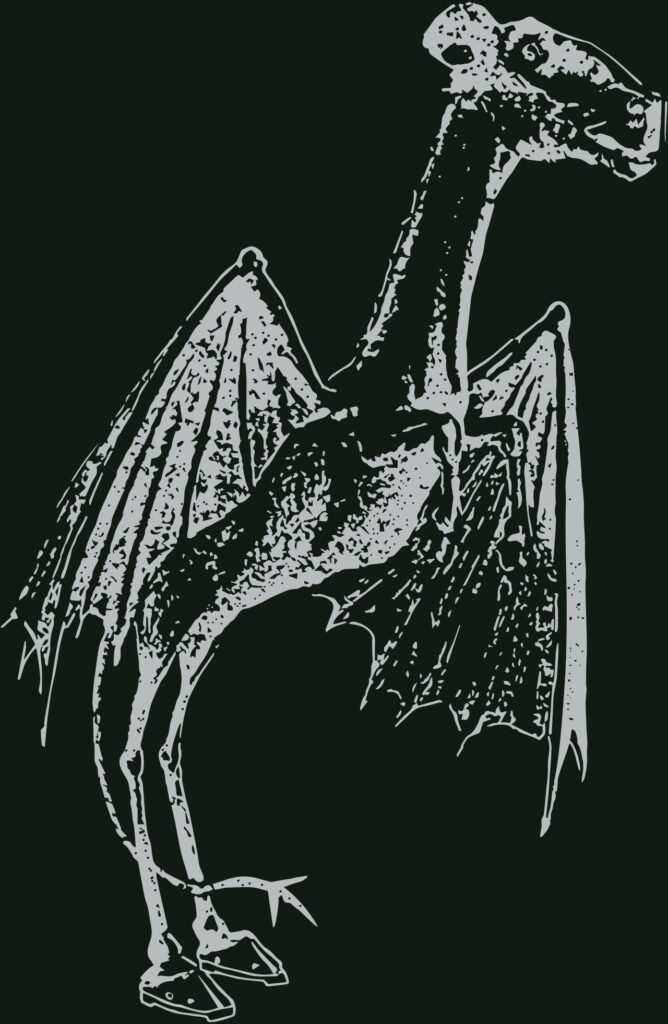 Public domain via Wikimedia Commons (Philadelphia Evening Bulletin illustration, January 21, 1909)
Reader’s note: legends and folklore are presented as reported stories and beliefs, not established fact.
For one week in January 1909, the Jersey Devil was everywhere.
It started with strange tracks in the snow. Then the newspapers of Philadelphia, Trenton, and Camden filled with encounters: a creature with a horse’s head, bat-like wings, claws, and hooves that attacked a trolley car in Haddon Heights, terrorized a social club in Camden, and shrugged off police gunfire in two states. Schools closed. Workers stayed home. People reported it on their doorsteps, screeching in the night, and then it was gone — up into the dark, as always, toward the pines.
The Jersey Devil has been scaring New Jersey for nearly 300 years, and it is the Garden State’s most famous monster. It is also a monster with three separate births, and none of them is the one most people know. It was born first as a political insult, then as a newspaper panic, and finally as a dime-museum hoax. The creature itself has never left a single piece of physical evidence. What it left instead is a perfect case study in how legends are made — and why they refuse to die.
The legend as told
The story everyone knows goes like this. In 1735, in a settlement called Leeds Point on New Jersey’s southeastern coast, a woman known as Mother Leeds went into labor with her thirteenth child. She had twelve already, and the pregnancy was long and agonizing. In her pain and frustration she cried out, “Let this one be a devil!”
The child was born looking normal. Then it changed. It sprouted wings, a tail, claws, and hooves, and a horse’s head — a goat’s head, in some versions. It shrieked, beat everyone in the room with its tail, and flew up the chimney and out into the night, into the Pine Barrens, where it has lived ever since.
There are variants, as there always are with old legends. In one, Mother Leeds was a witch and the child’s father was the devil himself. In another, the Devil is the child of a young woman cursed by her neighbors after a liaison with a British soldier during the Revolutionary War. In some tellings, local clergymen tried to exorcise the creature from the Barrens and failed. The details shift by teller. The constants are the wings, the hooves, the shriek, and the pines.
There is just one problem with the 1735 story: there is no contemporary evidence for it at all. No colonial record mentions a devil-child born at Leeds Point. The tale, folklorists have found, crystallized much later than the date it claims. To understand where the Jersey Devil really came from, you have to start not with a monster, but with a family feud.
The family behind the name
The Leeds family were real people, prominent in colonial South Jersey. Daniel Leeds was a royal surveyor of West Jersey who surveyed and acquired land around Egg Harbor — land that became Leeds Point, the place most associated with the legend today. He was also an astrologer and almanac publisher with a reputation for occult interests, and a staunch supporter of the British crown in a part of New Jersey that was largely anti-monarchist. That combination made him enemies.
His son Titan Leeds followed him into the almanac business — and into a rivalry with the most famous almanac publisher in the colonies, Benjamin Franklin. Franklin, never one to waste a good joke, published a mock prediction of Titan Leeds’s death. He then kept jokingly referring to Titan as a “ghost” — even after Titan actually died in 1738.
Folklorist Brian Regal and other researchers trace the legend to this knot of religious and political hostility. “Leeds Devil,” in this reading, began as a slur — a way for the Leeds family’s enemies to brand them as diabolical — before it was retold, generation by generation, as a literal monster in the woods. The Leeds family, for their part, eventually embraced the reputation: their publications carried a family crest depicting a creature that looked very much like the Devil of the stories.
The first printed mention of the creature comes much later than 1735: an 1859 article in the Atlantic Monthly about the Pine Barrens, whose author recorded, with some disdain for the locals, that “little children did be eaten and maids abused” by the monster. By then, the “Leeds Devil” was already an established ghost story in southern New Jersey.
There may be an even older layer. The Lenape people of southern New Jersey venerated a forest spirit called M’sing, described as a deer-like creature with bat-like wings. It is possible that European settlers, hearing of M’sing, mapped it onto their own whispers of a Leeds Devil. The monster, in other words, may have been standing in those woods before any Leeds ever arrived.
The week that made the monster
For all that history, the Jersey Devil most people picture — the standardized image with the horse head, bat wings, claws, and hooves — was not born in 1735 or 1859. It was born in a single week: January 16–23, 1909.
It began with tracks. Mysterious hoof-like prints appeared in the snow around Bordentown, Mount Holly, and Leeds Point, and Philadelphia-area newspapers ran with them. Within days, hundreds of claimed encounters poured in from across South Jersey and the Philadelphia area, reaching as far as Delaware and western Maryland. A trolley car in Haddon Heights was “attacked.” A social club in Camden was terrorized. Police in Camden and Bristol, Pennsylvania, supposedly fired on the creature to no effect. The coverage created genuine fear through the Delaware Valley: schools closed and workers stayed home.
The 1909 flap also gave the creature its modern name. Before that week it had been the “Leeds Devil” or “Devil of Leeds” — and, in the newspapers’ wilder moments, the “Flying-Hoof,” the “Air-Hos,” and the “Winged Dog.” It is only after 1909 that “Jersey Devil” comes into use. The illustration published in the Philadelphia Evening Bulletin on January 21, 1909 — horse head, bat wings, hooved feet, forked tail — is the image that stuck, and it is still the image everyone draws today.
Tradition adds two famous witnesses from the years before the flap: war hero Stephen Decatur, who supposedly met the Devil at his foundry in the Pine Barrens, and Joseph Bonaparte, the ex-king of Spain, who claimed an encounter on his Point Breeze estate. Treat those the way the record treats them: as tradition, not documented fact. The 1909 reports themselves are newspaper claims made during a panic, not verified events. And inside the panic sat something even better documented than any sighting — a hoax.
The man who sold the panic
Norman Jeffries was a press agent for Charles A. Bradenburgh’s Ninth and Arch Street Dime Museum in Philadelphia — a showman, in other words, whose job was getting paying visitors through the door. In early January 1909, as the first track reports were appearing, Jeffries began planting Leeds Devil stories in local newspapers, feeding the very panic he would then charge admission to see. When the frenzy peaked, the Dime Museum exhibited its prize: a “captured” Jersey Devil, which was in fact a kangaroo fitted with fake wings.
It is a perfect, almost too-neat ending to the story of the 1909 flap, and it is the part that is best documented. The newspapers, eager for a sensation that sold copies, had run the story hard for a week. A showman saw the wave coming, paddled out in front of it, and rode it straight to the box office. The kangaroo, presumably, was unbothered.
This is the mechanism that built the modern Jersey Devil: a real regional ghost story, amplified by sensation-hungry newspapers into a mass panic, then monetized by a hoaxer, then remembered as if all three layers were one event. The panic ended. The image it standardized did not.
What people actually see
Sightings have continued sporadically ever since 1909, though never again at that week’s intensity. And here the record is blunt: the Jersey Devil has no physical evidence and only scattered, inconsistent reports. No body, no bones, no clear photograph, no footprint cast that survived scrutiny.
The explanation most often offered for modern sightings is a bird: the sandhill crane. It lives in the low wetlands of southern New Jersey, it has a wingspan approaching seven feet, and it emits a loud, whooping, almost prehistoric call. Seen badly, at dusk, across a marsh — a tall, winged shape with a long neck and an unearthly cry — it is not hard to understand how a crane becomes a devil in the telling.
But the deeper explanation is the place itself. The Pine Barrens cover some 1.1 million acres — 22 percent of New Jersey — of sandy soil, dense forest, and dark waterways, largely undeveloped in the middle of the most densely populated state in America. It is a landscape built for monster stories: easy to get lost in, hard to see across, full of old iron towns and cranberry bogs and roads that go nowhere. A monster that belongs to a specific, real, visitable wilderness has an advantage over one that merely haunts a house. You can go to the Pine Barrens. You can stand in them at dusk and feel, quite reasonably, that something could be out there. The Barrens entered pop culture on their own terms, too — most famously as the setting of The Sopranos‘ “Pine Barrens” episode — and in 1982 the NHL’s New Jersey Devils took the creature’s name, giving the legend a hockey team and a permanent address in American culture.
Why it endures
The Jersey Devil endures because it was never really one story. It is a political insult that became a ghost story, a ghost story that became a newspaper panic, and a panic that became a hoax — and at every stage, the telling got better and the evidence stayed at zero. Each generation inherited not a creature but a shape: wings, hooves, a shriek, a place. And the place is real, which is the whole trick. The Pine Barrens are still there, still dark, still 1.1 million acres of maybe.
That is the honest verdict on the Jersey Devil, and it is more interesting than a monster. A family feud gave it a name. A week of newspapers gave it a face. A showman with a kangaroo gave it a punchline. And a vast, wild forest in the middle of New Jersey gave it somewhere to live forever — which is exactly what it has done, for nearly 300 years, without ever once being caught.
Frequently Asked Questions
Is the Jersey Devil real?
There is no physical evidence for the Jersey Devil — no body, bones, verified photograph, or footprint cast — and its reports are scattered and inconsistent. Folklorists trace the legend to a colonial-era feud involving the real Leeds family, and the famous 1909 sightings are best explained by press-driven mass panic, misidentification, and at least one documented hoax. The creature is folklore, not a documented animal.
Did Mother Leeds really have a 13th child in 1735?
There is no contemporary record of a devil-child born at Leeds Point in 1735, or of a woman called Mother Leeds giving birth to a 13th child that transformed and flew up a chimney. The tale crystallized much later than the date it claims. The Leeds family was real — Daniel Leeds, a royal surveyor and almanac publisher, and his son Titan — and researchers trace the “Leeds Devil” name to the political and religious hostility directed at them, including Benjamin Franklin’s mock predictions of Titan’s death.
What happened in January 1909?
During the week of January 16–23, 1909, newspapers published hundreds of claimed Jersey Devil encounters across South Jersey and the Philadelphia area. It began with mysterious hoof-like tracks in the snow, then reports of a trolley car attacked in Haddon Heights, a social club terrorized in Camden, and police firing on the creature to no effect. Schools closed and workers stayed home. The week standardized the creature’s modern image — and the name “Jersey Devil” itself only came into use afterward.
What do people actually see?
The explanation most often offered for modern sightings is the sandhill crane, a large wetland bird with a wingspan approaching seven feet and a loud, whooping call that lives in southern New Jersey’s wetlands. Seen poorly at dusk across a marsh, it is easy to understand how it becomes a winged monster in the telling. Other sightings are misidentifications, tall tales, or simply the power of suggestion in a forest famous for its devil.
Where can you look for the Jersey Devil?
Leeds Point, in Atlantic County, is the legend’s home ground, and the wider New Jersey Pine Barrens — about 1.1 million acres of forest, bogs, and old iron towns, including Wharton State Forest — are where the stories live. The Barrens are public and visitable, and that is part of the legend’s power: the monster’s home is a real place you can stand in at dusk. Just don’t expect to find the Devil. Expect to understand why people thought they did.
Keep exploring
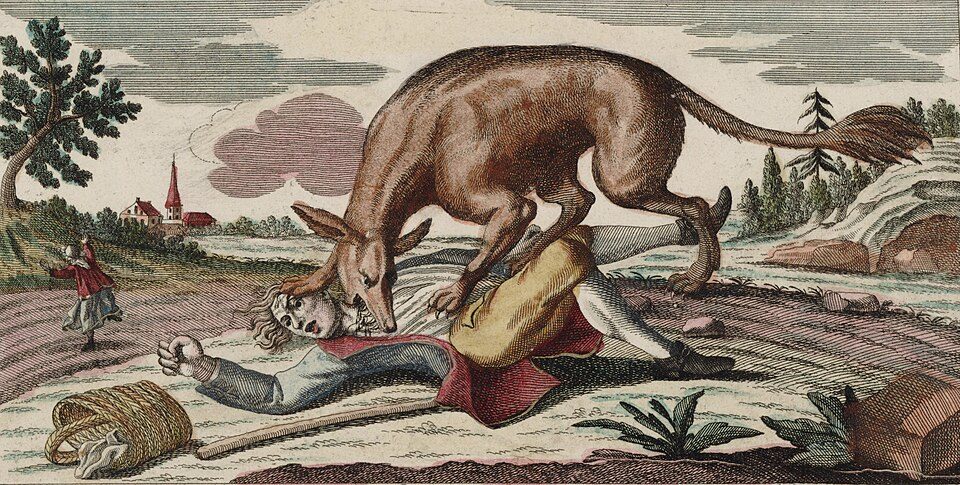
The Beast of Gévaudan: France’s Real Monster — and the Identity Nobody Could Prove
Most legends in this genre dissolve when you look for the bodies. This one is the opposite. Between June 1764 and June 1767, in the old…
Read story →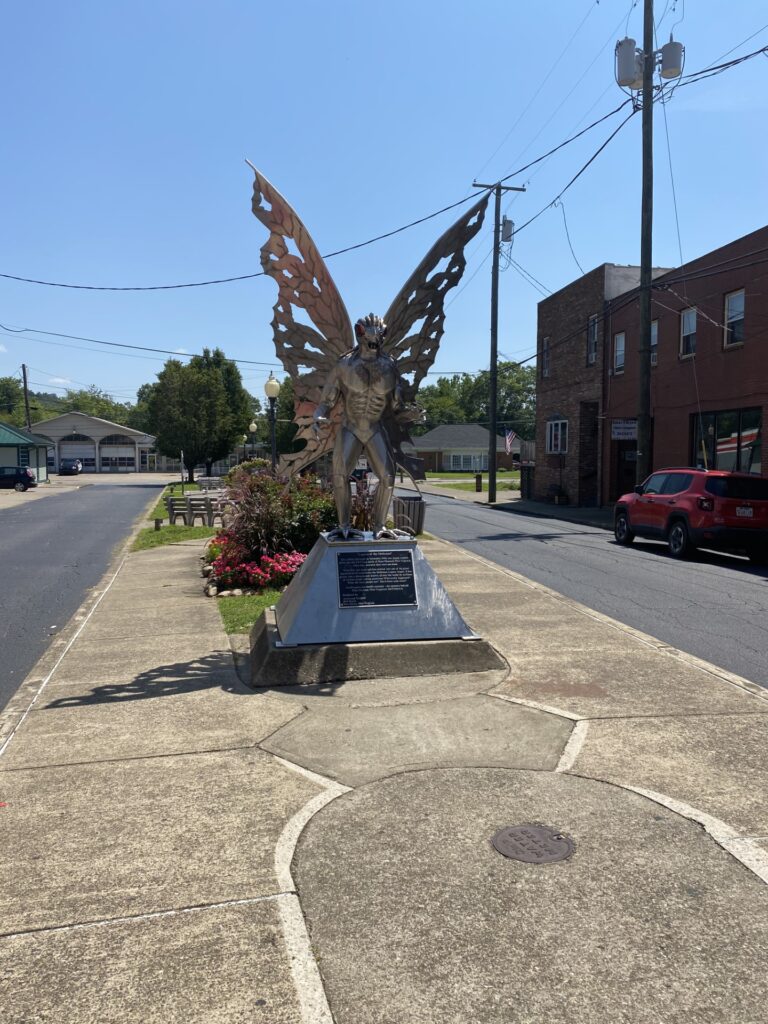
The Mothman of Point Pleasant: The Real Tragedy Behind the Legend
For thirteen months in 1966 and 1967, the small town of Point Pleasant, West Virginia, lived under the gaze of something with wings and glowing red…
Read story →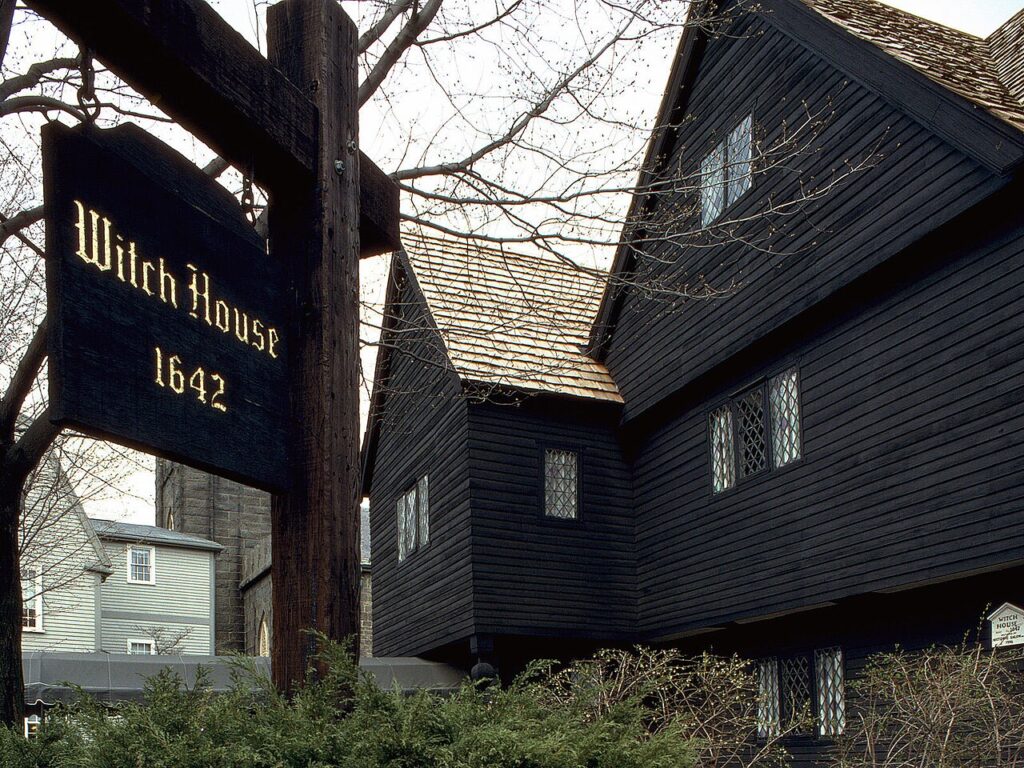
The Salem Witch Trials: Two Hundred Accused, Twenty Dead, and Not a Single Witch
Every October, more than a million people pour into Salem, Massachusetts — 1.1 million unique visitors in October 2025 alone, 96,600 of them on Halloween Day…
Read story →